Free vs Paid Reverse Phone Lookup Services: Which One Should You Choose?
Free vs Paid Reverse Phone Lookup Services differ most in data depth, accuracy, privacy controls, and how much confidence they give you before calling back an unknown number. A free search can be enough for quick caller identification, while a paid lookup may be worth it when you need a fuller report, stronger scam detection, or repeated access to phone number information.
Choosing the right option depends on why you are searching. If you simply want to check whether a missed call is from a business, a free tool may do the job. If the number is linked to harassment, suspected fraud, online marketplace activity, or repeated unwanted calls, a paid reverse phone lookup service can provide more context and help you make a safer decision.
Understanding Reverse Phone Lookup Services
A reverse phone lookup service lets you search a phone number to find available information connected to it. Instead of starting with a person’s name and looking for a number, you start with the number and look for details such as the caller’s name, location, carrier, line type, business identity, or spam risk.
These services are commonly used to identify unknown callers, verify whether a number belongs to a legitimate business, and screen suspicious calls before responding. For consumers, this can reduce the risk of falling for phishing attempts, fake debt collection calls, impersonation scams, or fraudulent delivery notifications.
Reverse phone lookup tools pull from different sources, including public records, business directories, user-reported spam databases, telecom data, social profiles, and data broker records. The quality of the result depends heavily on the provider, how recently its data was updated, and whether the number is a mobile, landline, VoIP, or business line.
Pros and Cons of Free Reverse Phone Lookup Services
Free reverse phone lookup services are useful for quick checks. They are usually easy to access, require little or no setup, and can reveal enough information to help you decide whether to answer, block, or ignore a number.
Advantages of free services
- No cost: You can search unknown numbers without paying for a report or subscription.
- Fast access: Many free tools provide instant basic results, especially for known businesses or commonly reported spam numbers.
- Good for obvious scams: If many users have reported a number as spam, a free lookup may quickly show warnings or comments.
- Helpful for business verification: Search engines and directory listings often identify restaurants, clinics, service providers, and local companies.
Limitations of free services
- Incomplete data: Free tools may show only a general location, carrier, or line type without naming the caller.
- Outdated records: Phone numbers change owners, and free databases may not update quickly.
- Limited mobile number details: Cell phone records are harder to verify than landline or business listings.
- Privacy trade-offs: Some free platforms collect user data, display ads, or prompt you to create an account before revealing results.
A free service may be enough if you are checking a one-time missed call, confirming a business number, or looking for public spam reports. It is less reliable when you need a verified identity, address history, or deeper background context.
Pros and Cons of Paid Reverse Phone Lookup Services
Paid reverse phone lookup services typically offer more detailed reports than free tools. They may combine public records, proprietary databases, address history, possible relatives, associated emails, social profiles, criminal record indicators, and fraud risk signals into one report.
Benefits of paid services
- More complete reports: Paid providers often show names, aliases, previous addresses, related numbers, and possible online profiles.
- Better data matching: Many paid tools cross-reference multiple sources to reduce false matches.
- Useful for recurring issues: If you receive repeated calls or texts from unknown numbers, detailed records can help you document patterns.
- Extra safety features: Some services include spam scoring, fraud alerts, dark web monitoring, or identity protection tools.
Costs and drawbacks
- Subscription pricing: Many paid services use monthly plans rather than one-time reports.
- Variable accuracy: Paid does not always mean perfect. Phone numbers can be reassigned, spoofed, or hidden behind VoIP systems.
- Auto-renewal concerns: Users should review cancellation terms before subscribing.
- Legal restrictions: Most people-search services cannot be used for employment, tenant screening, credit decisions, insurance eligibility, or other purposes covered by the Fair Credit Reporting Act unless the provider is specifically FCRA-compliant.
Investing in a paid service makes sense when personal safety is a concern, when you need more than a basic caller ID result, or when you regularly screen unknown callers for business, marketplace, dating, or family protection reasons.
Comparing Features of Free vs Paid Services
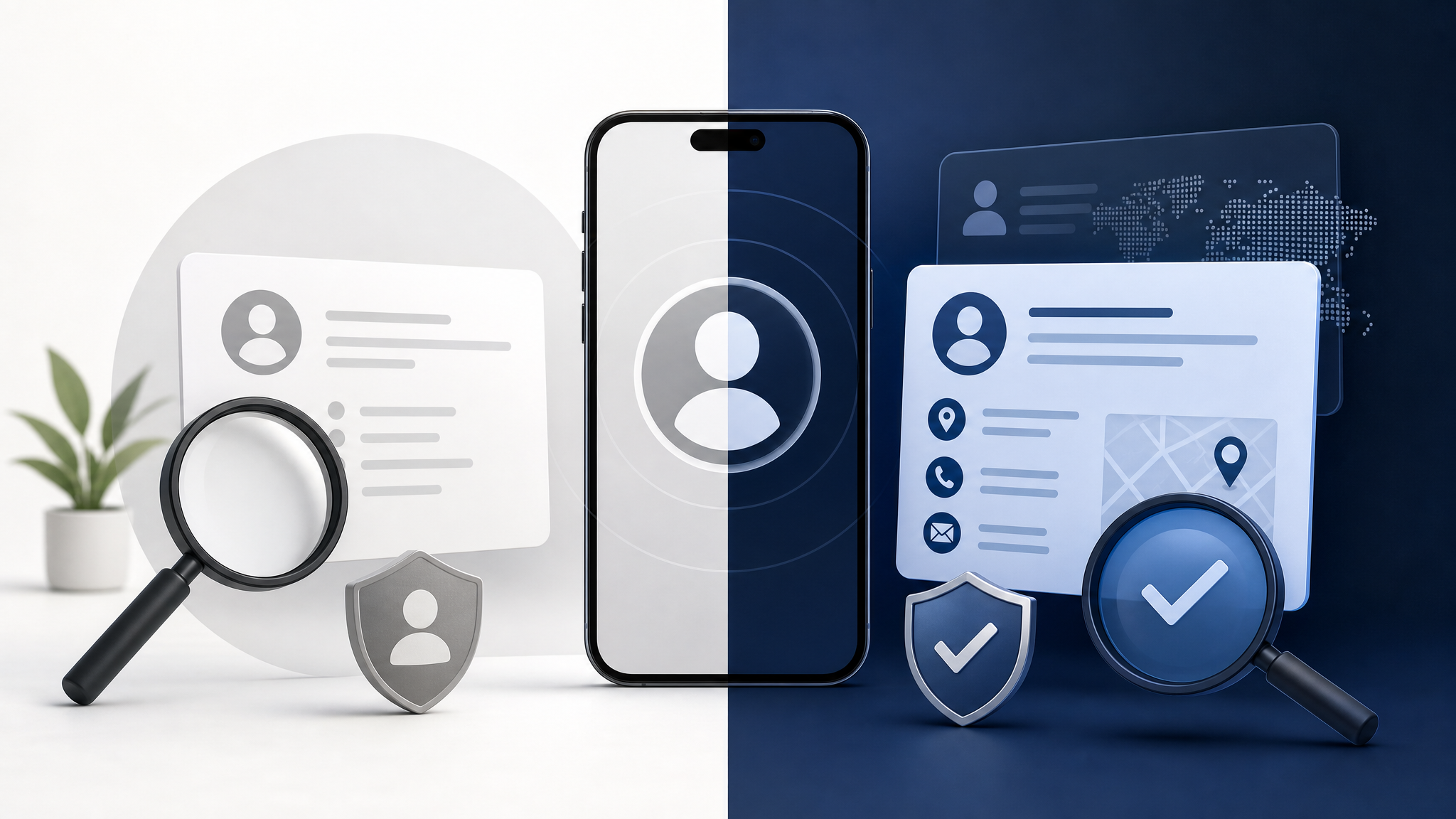
The biggest difference between free and paid reverse phone lookup options is not just the amount of information shown. It is the confidence level behind the information. Free tools often provide clues. Paid tools are better suited for connecting those clues into a more complete caller profile.
| Feature | Free Reverse Phone Lookup | Paid Reverse Phone Lookup |
|---|---|---|
| Basic caller identification | Often available for businesses and reported spam numbers | More likely to include names and related records |
| Mobile number details | Limited and often incomplete | Usually stronger, though not guaranteed |
| Spam and scam detection | May include user reports or search engine results | May include fraud alerts, risk scores, and wider database checks |
| Report depth | Carrier, location, business listing, or public comments | Possible owner name, address history, emails, relatives, and online profiles |
| Cost | Free, sometimes ad-supported | One-time fee or monthly subscription |
| Best use case | Quick checks and obvious spam screening | Safety concerns, repeated calls, and deeper verification |
User satisfaction varies by expectation. People tend to be happy with free services when they only need a quick answer. Paid services receive stronger reviews when users need detailed reports, but complaints often involve unclear pricing, auto-renewals, or reports that do not identify every mobile or VoIP number.
Best Free Reverse Phone Lookup Services
Free reverse phone lookup tools are best used as a first step. They can quickly reveal whether a number is connected to a known business, a spam campaign, or a publicly discussed scam.
- Google or Bing Search: Useful for finding business listings, complaint pages, forum posts, and scam reports tied to a number.
- Truecaller: Offers community-based caller ID and spam detection, especially helpful for mobile numbers reported by other users.
- Whitepages Basic Search: May show line type, general location, and limited caller information for some numbers.
- Spy Dialer: Provides basic reverse phone lookup options, including name or voicemail-based checks in some cases.
- Social Media Search: Some users link phone numbers to public profiles, though results are inconsistent and privacy settings often limit visibility.
The main limitation is that free services rarely provide a complete, verified identity for private mobile numbers. They can also produce conflicting results, so it is smart to compare more than one source before deciding whether a number is safe.
Top Paid Reverse Phone Lookup Services
Paid reverse phone lookup services are designed for users who need broader data access and more detailed reports. Pricing changes often, so always check the provider’s current terms before purchasing.
| Service | Notable Features | Typical Pricing Model |
|---|---|---|
| BeenVerified | Phone lookup, people search, address history, email search, and mobile app access | Monthly membership |
| Intelius | Detailed people-search reports, reverse phone lookup, background-style public record searches | Trial offers or subscription plans may be available |
| TruthFinder | Public records, possible social profiles, contact information, and dark web monitoring features on some plans | Monthly subscription |
| Spokeo | Contact details, social network matching, address records, and email lookup | Monthly plan or limited report options |
| PeopleFinders | Reverse phone lookup, people search, address lookup, and public records | Single reports or memberships may be offered |
| Whitepages Premium | Owner details, address history, relatives, and expanded phone records where available | Premium reports or subscription options |
Users who find paid services effective often mention that they helped identify persistent unknown callers, verify online marketplace contacts, or connect a suspicious number to a known scam pattern. Less satisfied users usually report that a result was incomplete, the number was spoofed, or they did not realize the service renewed automatically.
Choosing the Right Reverse Phone Lookup Service
The best choice depends on how often you search numbers and what level of detail you need. For occasional curiosity, start free. For repeated unwanted calls, suspected fraud, or safety-related verification, a paid report may be worth the cost.
Use a free service if:
- You only need to check a single missed call.
- The number appears to belong to a business or public organization.
- You want to confirm whether other people have reported the number as spam.
- You do not need the caller’s full identity or address history.
Consider a paid service if:
- The same number keeps calling or texting you.
- You are dealing with a suspected scam, harassment, or impersonation attempt.
- You need more complete caller verification before responding.
- You frequently screen unknown numbers for personal or business safety.
To get better results, search the number in multiple formats, including with and without the country code. Compare findings across more than one source, and avoid relying on a single report if the situation involves money, legal issues, or personal safety.
Protect your privacy while using these services. Do not enter unnecessary personal details, review opt-out policies, and avoid services that require excessive permissions. If you discover your own information in a people-search database, look for the provider’s removal or suppression process.
Frequently Asked Questions
What information can I find using a reverse phone lookup?
A reverse phone lookup may show the caller’s name, business name, general location, carrier, line type, spam reports, address history, related phone numbers, email addresses, or public records. Free tools usually show basic data, while paid services may provide broader reports.
Are free services reliable for scam detection?
Free services can be reliable for well-known scam numbers, especially when many users have reported the same caller. They are less reliable for new scams, spoofed numbers, private mobile numbers, and VoIP lines. If a call asks for payment, passwords, gift cards, verification codes, or sensitive personal data, treat it as suspicious even if a lookup result seems harmless.
How do I report a fraudulent number effectively?
Save call logs, text messages, voicemails, screenshots, and any payment requests. Report the number to your phone carrier, mark it as spam on your device, and file a complaint with the appropriate consumer protection authority, such as the Federal Trade Commission in the United States. If money was stolen or threats were made, contact local law enforcement or your financial institution immediately.
What are the privacy implications of using these services?
Reverse phone lookup services may use public records, commercial databases, and user-submitted information. Some sites also collect search activity or account details. Review the privacy policy before using a service, avoid unnecessary sign-ups, and use opt-out tools if you want your own information removed from people-search databases where possible.
It is essential to weigh the benefits and limitations of both free and paid reverse phone lookup services. Depending on your needs, the right service can improve caller identification, support safer communication, and help you avoid phone scams before they cause damage.